
SURREALISM
WHAT IS SURREALISM
Surrealism defined by Brittanica, is a movement in visual art and literature that flourished in Europe between World Wars I and II.
Surrealism grew principally out of the earlier Dadaism movement, which before World War I produced works of anti-art that deliberately defied reason; but Surrealism’s emphasis was not on negation but on positive expression.
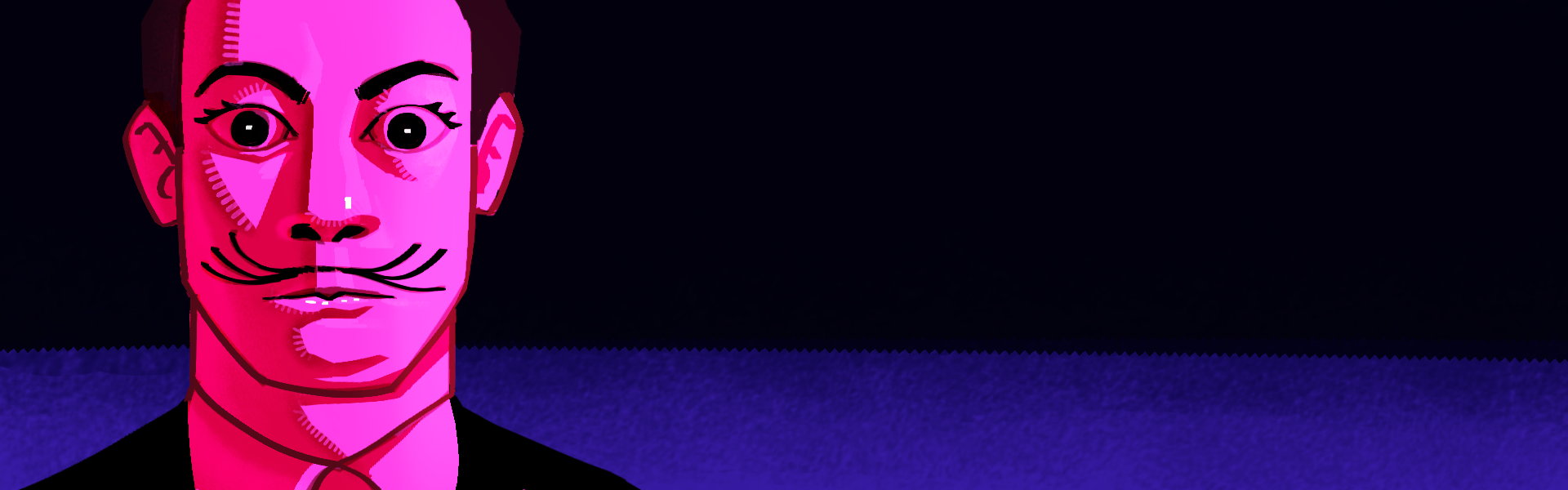
SALVADOR DALI
“Pure psychic automatism, by means of which it is proposed to express, be it through writing, verbally or in any other way, the real functioning of thought; of the dictation of thought in the absence of all control exercised by reason and outside all moral or aesthetic concerns.”
WHAT DOES SURREALISM MEAN
FOR US?
Through our research and data gathering process made in preparation of this project however, surrealism is loosely defined and freeform in nature.
Each person has their own definition of surrealism and what they find to be surreal, as surrealism is not entirely bound to a single correct method or definition, nor is there a sole single interpretation, but rather the art form is shaped by the artist and viewer’s personal experience and expression.
Despite that however, Surrealism still continues to be bound to familiar aspects of reality and a general meaning can still be interpreted out of the symbolism and techniques applied to the art form.
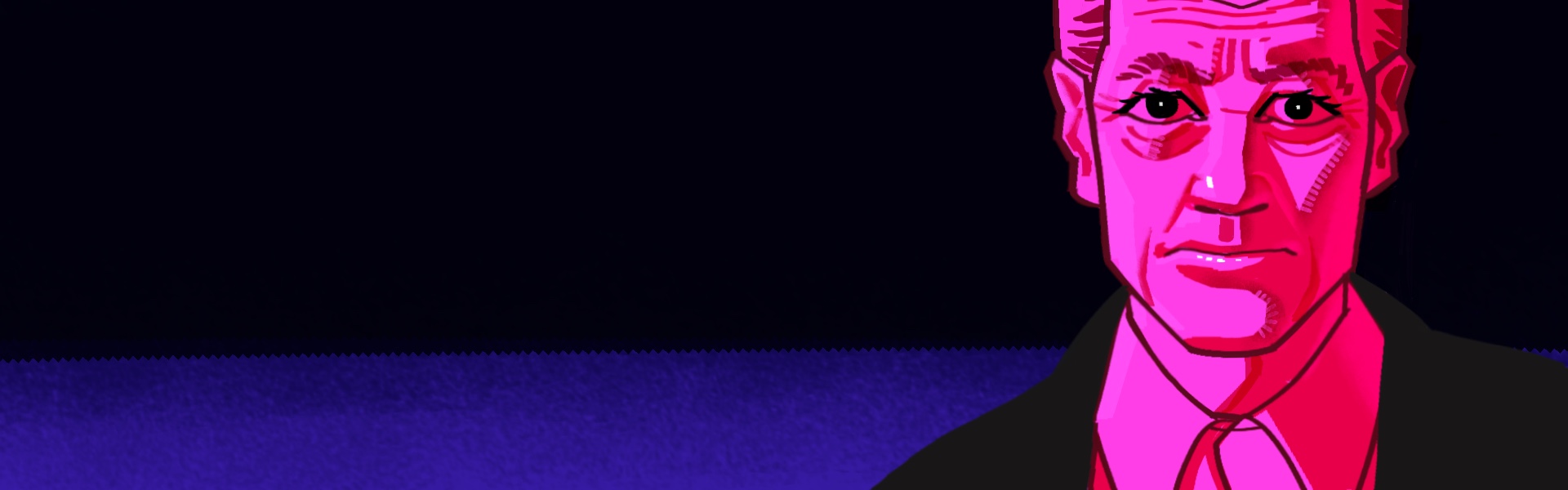
DAVID LYNCH
David Lynch, one of the pioneers of the art movement in its application to film did not give a formal academic definition of surrealism, but expressed it as a form of unconscious thoughts and ideas stemming from letting his mind roam free, as stated “This is why daydreaming is so important to me. All the thoughts just flow.”
When asked if he ever starts without an idea, he states that the act of picking up the tool that you use for your medium is already an idea. This is to say that ideas are what drives everything and despite not consciously thinking about it, our subconscious already has an idea behind the act that we have to channel and externalize.
VISUAL METAPHORS

LIGHT
Light is often used by artists to highlight key visuals and the absence of it to introduce the feeling of depth of the composition, but light is also often used in conveying key symbolical messaging and culturing meaning. Light often means but is not restricted to symbolizing hope, warmth, and divinity, and its absence symbolizes uncertainty, gloom, and evil.
When analyzing a composition by its light, analyze it knowing what the artist behind the work wants to highlight, and what the artist chooses to leave in the dark, and how the use of lighting may have played a key in telling the theme. An artist may choose to also employ the art of using casted shadows to form meaning.
COLOR
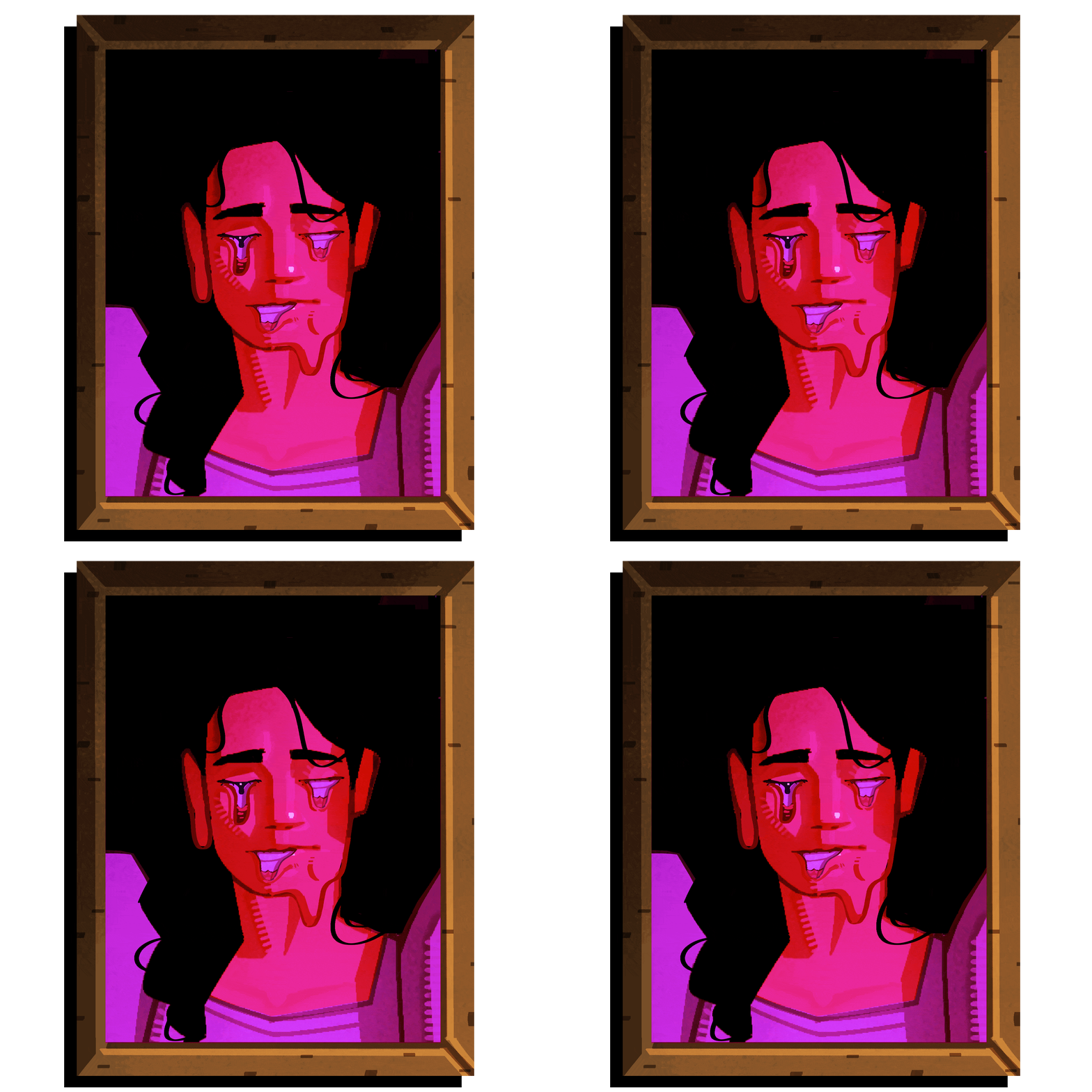
Color is generally used as a way to convey and provoke emotions out of its viewers. Each color has a general meaning tied to it, examples include the basic 5 emotions, red representing anger, yellow for joy, blue for sadness, and etc, but in the context of surrealism, color goes much deeper.
When analyzing a composition by its color, first analyze the general meaning behind the colors, before analyzing it as a whole, how it combines with each other. What does this color palette represent, the level of saturation it uses, the level of contrast between the values? Analyzing color by viewing it in contrast or in similarity to the other colors present in the art piece brings a new level of depth you might’ve otherwise missed.
SPACE
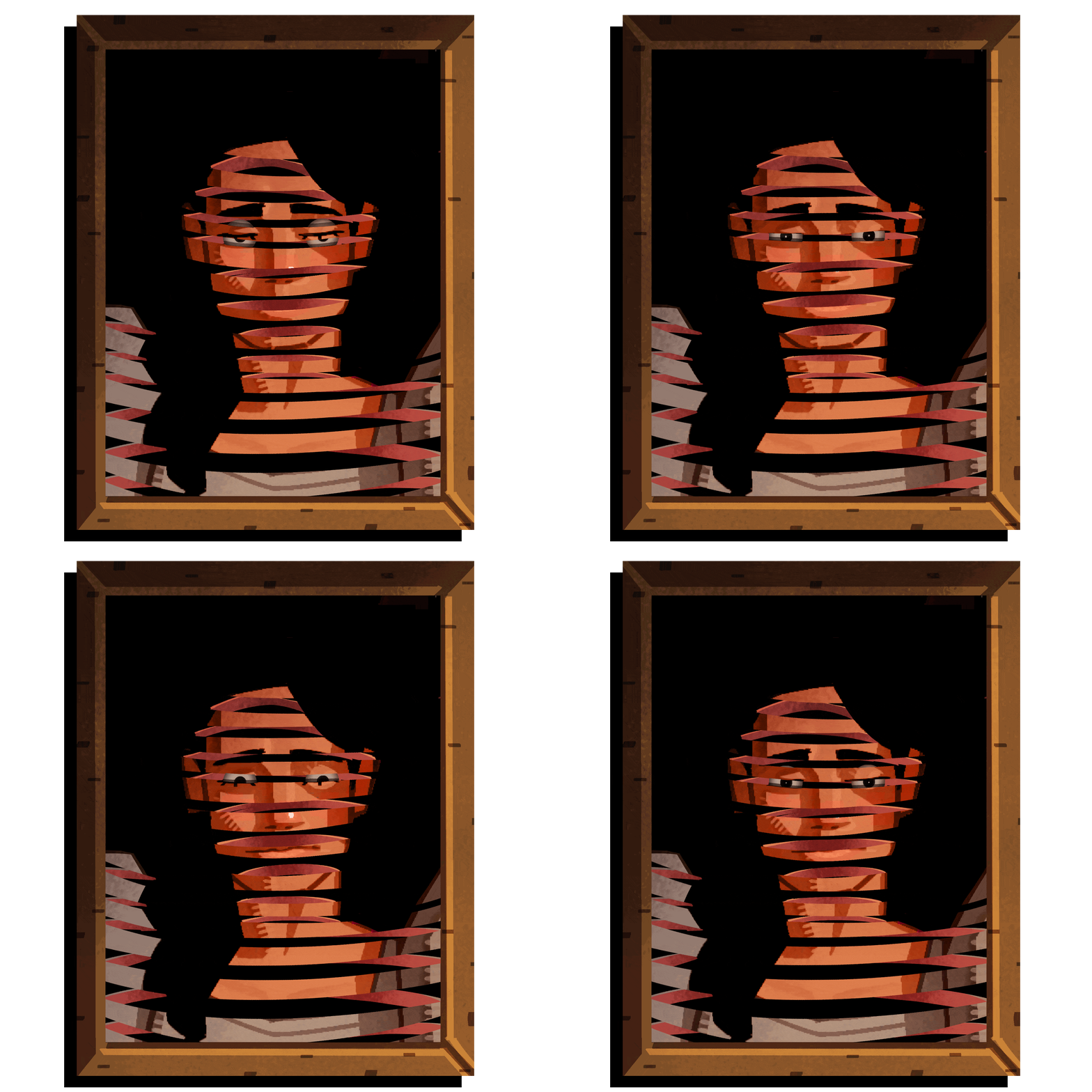
Space in art could be best described as the areas where an object occupies. Positive space means the space that a subject(s) occupies and negative space means the space that a subject does not occupy.
When analyzing an art piece by the space it occupies and does not occupy, we can examine how the balance, emphasis, depth, and visual meaning within the composition was created through the interaction between the positive and negative spaces.

AUTOMATISM
Surrealist artists explored with the process known as Automatism, the act of speaking, writing, or even drawing rapidly what comes to mind without a specific direction nor filtering oneself. Surrealist artists employ this technique to externalize their innermost and uninhibited thoughts, and to bring out the unconscious mind that may have been self-censored.
This process is akin to the feeling of daydreaming and according to some artists, the meaning behind each piece made through this technique may not necessarily have a specific meaning, and is an invitation for both the viewer and artist to draw meaning out of their creation. When analyzing surrealism that appears to show no logical structure, focus on what elements you can find in the painting, and then focus on how the whole makes you feel, and figure out how the elements draw towards that idea.

JUXTAPOSITION
Juxtaposition’s application in surrealism made use of the idea of placing multiple elements together to form new meaning out of its visual combination, or to put two opposing elements together to compare their meanings against each other.
This technique paved the way for surrealists to explore new ways of representing an element by distorting its grounded meaning and create dreamlike visuals that you wouldn’t normally find in reality that leaves a sense of mystery and disorientation to the viewer. When analyzing an artwork or a scene from a film using juxtaposition, try to draw the general meaning of the element present, compare it to the theme of the story, how the character related to that element feels about it, and draw meaning from how it would connect to the other element juxtaposed with it

COMPOSITION
Composition’s application in surrealism refers to the arrangement of visual elements to form a feeling of 3d space, creation of visual hierarchy, and emphasis on space between elements. It is mainly composed of a foreground, midground, and a background.
Where the foreground, or the element that appears closest to the viewer often has the main subject of the art form, but not always, depending on the artist’s intent. When analyzing an artwork or a scene from a film’s composition it’s easier to make meaning after figuring out what you believe is the main subject of the piece to be.